What is the Spanish for Dog?

O

Cómo se Dice Dog en Español? Perro

If you ever want to see a tiny human dynamo, meet Anechy Padron who immigrated from Cuba. (She and her illustrator are pictured above.)  She immigrated with the help of her mother and brother, who were living in Tampa at the time.

While in Cuba, Anechy wrote a children’s book about a Chihuahua, Patti, who meets a feral cat, Barci, that lives in the “City of Cat.” But now that Anechy lives in the U.S.A., she thought it would be nice to write the story in English as well.

The story is charming and well-written. Children will relate to the animals and cheer them on. And the children will learn how to be better people and how to care about all creatures. And they will also learn a bit about life in Cuba.

Interview Questions

  1. Please tell us how to pronounce your name. I believe you told me that Anechy is a nickname. What is your full name?

My full name is Adianez Padrón Ramirez, but my brother gave me the nickname of Anechy, and it stuck forever. A friend created a little game to pronounce my nickname, you say Aww(yawning), point at your knee, and finally you sneeze. Aw-knee-chis!

  • Did you grow up in Havana? Or in another part of the island?

I was born in Santiago de Cuba, on the east end of the island. Then, my parents moved to Holguin for a year and a half. But at age four and a half we moved to Havana, where I lived for 25 years, until I came to the States. My parents were in the military. They moved a lot.

  • Where did you go to college? In Cuba or America?

       I studied accounting for five years at the University of Havana. That wasn’t what I wanted. I wanted journalism, language, anything that had to do with writing and arts. But my mom wasn’t supportive then about my being an artist. While in college, I went to every literary event or class I could find. Often times people would find it odd that I was there while studying accounting.

  • How did you get to the United States of America?

Long story. We would need a whole new interview. In sum, I followed my family. My brother rafted out of Cuba in 2000. In 2008, he became a U.S. Citizen and applied for family reunion. My mom was granted a visa in 2009, but I had stay in Cuba for one year before I got my visa in 2010. It was a long process to get out of Cuba. Having a U.S. Permanent Visa wasn’t enough for the regime. In 2010, there was a law in Cuba that I had to give all my properties back to the Cuban government, and I had to pay 550 dollars for a “white card,” which I called the freedom card.

  • Have you always been a storyteller?

       I was always an avid reader. As a small child, I couldn’t go to bed without a story. But I wouldn’t fall asleep until the end. My dad always fell asleep before. Then, I’d walk out of the bedroom with the book and tell Mom: “Mami, papi se durmió” Mom, daddy fell asleep. At age 10, I was reading Edgar Allan Poe and Guy de Maupassant. I started writing poetry and short stories in 6th grade when I was a member of a book club with five other girls. I couldn’t stop writing after that.

  • What compelled you to write this book?

 When I lived in Havana, I was babysitting a 3-year-old boy named Richy. (He just turned 18 years old.) I was also performing for children as a clown and a puppeteer. I was always writing rhymes and little stories for my live shows. One day, Richy and I were walking Isabella a.k.a. Patti in the story, and a little cat came to us. She was very friendly for a street cat. And even more surprising, my chihuahua liked her. I named the cat Barcina. Richy and I started dreaming and making up stories about this cat. I brought Barcina home but she did not like it. So, I started writing about her and imagining what my chihuahua and Barcina would be saying about me, and the neighbors. Then, I added my friends and their dog to the story. Richy and I loved this fantasy. Richy got me into this book, and I love it.

  • What are the names of the dog & cat?

The heroes of my book are Patti and Barci, a spoiled Chihuahua and a street cat.

  •  How did you come up with the names?

My chihuahua had many nicknames or terms of endearment, one of them was “puti” actually not a very nice word in Spanish, but it is endearing to a dog in Cuba. For the book I changed it to Pati. When I started editing the book, I added another T to honor my friend Patti, who helped me get my new dog Maya. Barci is short for Barcina, which means mutt for cats (Moggy).

In the story, the cat lives in a place called the City of Cats. Is there such a place in Cuba? In Havana? Do other Cuban cities and towns have such gathering places for the feral cats? Are they monitored by humans?

x

  •  

I lived in a 12-story Russian building in the newest part of Havana. We had a huge basement where the feral cats slept at night. I called the basement The City of Cats, it was a damp, dirty, and flea-infested place. I felt bad for those cats. There are places like that all over Havana. Very sad. On the other hand, they kept the mice population under control. In the process of re-writing the story I changed the setting from an ugly looking neighborhood to beautiful Old Havana, a city which beauty always makes me cry. I put the City under the Cathedral, and the rest is history.

There was a group of ladies in my neighborhood who collected school cafeteria leftovers to feed the cats. They captured injured cats, vetted them, and then found homes for them. But this was just done by good-hearted ladies, there is no organization in Cuba that helps. There is a non-profit from Canada called The Spanky Project. https://spankyproject.org/. They help street animals in Cuba by spaying/neutering/deworming them, and then either release or get them adopted. I learned a little bit more about them on my last trip to Cuba this past January.

  1.  I love that you are giving children the chance to learn a new language. It will bring the peoples of our world closer together, don’t you think?

I agree with you. I started learning English at age 11 and French in my early twenties. That opened the world to me. It has made it possible for me to travel, meet people, learn from others, read books that are not available in Spanish, and, mainly, understand that far from different, we humans have more in common than we think.

  1. I know you write short stories as well as books. What is your next short story? Or have you adapted part of this novel into a short story for the upcoming Next Chapter Literary Magazine which has the theme of friends?

Sarah, you gave me a great idea. I was trying to come up with something to write for the magazine. The latest thing I’ve written is the sixteen-character descriptions for books one and two. Yes, I forgot to mention I already have a second part for “The Adventures of Patti and Barci: The City of Cats.” The next book is “The Havana Forest.” I plan to write several books for this series, I just love these characters and I have so much fun with them.

Thanks for visiting my blog, Anechy. I look forward to reading the next saga of Patti and Barci.

Feel free to contact Anechy at anechy7@gmail.com for more information about her book and when it will be ready for you to read.
Introducing the Charming and Creative Bill Furney

www.billfurney.com

https://www.facebook.com/WCFurneyAuthor

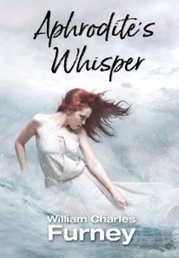
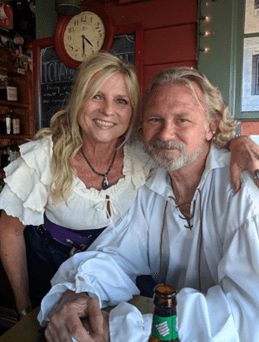
If I remember correctly, Bill Furney and his charming wife Jeanette met me during the first Authors’ Sunday Event at the end of November 2022. Bill was dressed as a pirate replete with a crimson sash around his waist and pirate’s sword guarding his books. Jeanette was dressed as a damsel in distress. I wrongly assumed that all his books would have a pirate theme, but that turns out not to be the case.

I bought a copy of Ivy Moon, thinking she was the damsel in distress. Well, Ivy may be in distress, and she may be a damsel, but don’t think she needs help. She’ll end up helping you.

Bill and Jeanette live just past Fairfield Harbour on Pastures Creek close to Blackbeard’s sailing club. They spend many mornings and evenings on their dock watching the abundant wildlife in their natural marsh habitat…sometimes with a complementary adult beverage. But that is not where they started out.

Where are you from originally? Were you a bookish child, or did you do wild and daring things to challenge your boyhood friends? Or a bit of both?

Bookish? I read a lot growing up, but no one ever called me bookish. Back then, boys were men. Calling a boy bookish wouldn’t fly well and would probably lead to a butt whuppin’. Anyone labeled bookish would have been teased mercilessly and relegated to the girls’ table at lunchtime.

I didn’t have friends growing up. My mother used to tie a pork chop around my neck so the dogs would play with me. That was kinda wild, now that I think about it.

Tell us about what you did before you retired to Fairfield Harbour and why you chose this lovely neighborhood that calls itself part of the enchanting town of New Bern. I believe you said you had been a journalist? Where? And what did you report about? And why did you switch writing gears?

Whereas these skills prepared me for civilian life in metropolitan arcadias such as Chicago, L.A., and Philadelphia, I instead decided to go to a university of higher learning which I won’t name here for fear of sullying their good name. After arming myself with a BS degree in Journalism, I ventured out into the world as a reporter where I proceeded to hone my skills at pissing people off with the written word.

I actually did accomplish stuff along the way. I earned degrees in public relations and advertising; became one of the first five people in the country to become a Certified Communicator in Public Health; was a reporter and columnist with the Jacksonville Daily News; and became the director of communication for several government agencies. In 2001, I helped form and became communication director for the Office of the Public Health Preparedness and Response – the state agency created to respond biological attacks and pandemic outbreaks.

Upon retirement, Jeanette and I moved to New Bern mostly because nobody here knew who I was yet. Living on a creek is a big bonus because it allows us to escape by land OR sea. We’ve been here a little over six years, so we need to be prepared. (See “neighbors ban together” above.)

In regard to writing, I wouldn’t say that I changed gears. I knew that I wanted to write novels when I went to college. I’m also a realist. I didn’t want to starve to death waiting to become rich and famous. That’s why I majored in journalism with an emphasis on public relations. In terms of creative writing, the best thing about working for a newspaper for a couple of years was that it taught me discipline. There’s no waiting for “inspiration” when you have a daily deadline to meet. If I were giving writers one piece of advice, it would be this; write something every day. Even if it’s only a paragraph or two. Push through blocks by writing something. Anything. You can always go back and change it. But waiting for inspiration does nothing but give yourself an excuse to procrastinate. If you procrastinate you aren’t a writer because you are procrastinating. Which makes you a procrastinator. (Profound, right?)

Have you always been attracted to watery areas? No desert sands for you?

Nothing against the desert, but I was born on the coast and grew up around the sounds and ocean. Mountains are great too. I loved living in Colorado. It would have been a perfect state, if it had an ocean. Also, when I was a child, I would listen to my parents’ album with American folk songs. There was one song titled, The Keeper of the Eddystone Light that I played over and over. It went…

 My father was the keeper of the Eddystone Light

And he slept with a mermaid one fine night

From this union there came three

A porpoise and a porgy and the other was me

One night while I was a-trimmin’ of the glim

A-singin’ a verse from the evening hymn

A voice from the starboard shouted, “Ahoy!”

And there was my mother a-sittin’ on a buoy

“Oh, what has become of my children three?”

My mothеr then she asked of mе

“One was exhibited as a talking fish

And the other was served in a chafing dish”

I mean, that’s pure genius. Who wouldn’t want to live on the coast and be a writer after subjecting one’s self to a Clockwork Orange behavioral conditioning treatment like that?

As pretty much every writer/author is asked at some point on his or her literary journey, where do your ideas come from? Tell us the story of how you came upon Ivy’s story. She’s a very strong character, but also gentle and helpful. I’d like to be her friend.

The ideas come from anywhere and everywhere, usually when you least expect it and usually followed by a “what if?”  The inspiration for Ivy Moon started after Hurricane Florence deposited a 36-foot Catalina on our back steps. One of my friends said, “I hope you checked inside for bodies.” And I thought, wow! What a great idea for a story. As you know, Ivy Moon starts with the sailboat being swept into a back yard here in the Harbour, but instead of a body, it’s a young teen (age unknown) with amnesia who is in the boat. But it was that little quip that started me thinking, “What if?”   

Tell us about your swashbuckling characters, and how your lovely wife came to personify one of them.

Hahahahaha… The truth is, Jeanette isn’t personifying either of them. She’s sort of portraying the character Sweets Nightingale, a lady of the evening who plies her wares in Charles Town (now known as Charleston). I personify Bloody Bill Scarlette, one of Blackbeard’s (fictional) former lieutenants who is retried and living at Ocracoke. We started wearing period clothes after my first book signing at the Beaufort Pirate Invasion. All the other authors were in period garb and looked at me like I was a weirdo because I was in contemporary clothing. When in Rome…

The swashbuckling ladies you referenced are, of course, Anne Bonny and Mary Read, two real infamous female pirates. I could talk about them for hours but suffice it to say that I was forced to write their story at cutlass point. The truth is, I kept seeing all these historical pieces about pirates that went into great detail about male buccaneers and then ended with…”and the two female pirates, Anne Bonny and Mary Read.” The writer in me kept asking, so who the hell were they and why aren’t their stories included in the retrospectives? The answers to those questions are in my historical fiction, Black Hearts White Bones. I invite readers to pick up a copy and find out.

What do you do when you’re not writing and selling your books. I believe you said you have a dog? Or did I just make that up?

You know, the usual stuff, fishing, boating, plundering, insulting people on the Internet. But yes, we have a West Highland White Terrier named Finlay. We are very proud of him because he has become a famous international model who appears on the cover of Ivy Moon Last Girl on Earth. Being the Fabio of the K9 world is heady stuff, but we’ve worked hard to make sure fame doesn’t go to his head.

Do you have family you try to keep toeing the line? Or do they make you toe the line? And what line is that?

Sadly, no one in my family has toes.

I look forward seeing the pair of you on October 29th, which is just around the corner. Sarah

While I won’t be able to make this authors event, I wish everyone attending the best and hope to see you soon.

Note: All of my books are on Audible.com and are performed by wonderful voiceover actresses. For those who don’t listen to audio books I invite you to go to my website where you can listen to the five-minute samples of my books just for the fun of it.

In addition to Amazon and Kindle purchase options, my books can also be found at the Next Chapter Books and Arts downtown New Bern.

BUY LOCAL!

Natalie Singletary Writes Poetically At least Some of the Time.

I met Natalie Singletary at the first New Bern Farmers’ Market’ Authors’ Sunday event in November 2022. I believe she has participated in all three of them, if you count the one we’re having this October 29th. When you check her website, https://obconwriting.wordpress.com/, you’ll see the poetry and intrigue she uses in her writing. Plus, her book covers will pull you in. I wanted to open them up right there on her website.

 Welcome, Natalie, and thanks for participating in my series of blog interviews. It gives me a chance to be nosy without being considered rude. I noticed you live in Havelock. Is that your birthplace or are you from elsewhere? Tell us a bit about your life, please. What teacher/s inspired you along your journey? What relative?  Do you have a partner who encourages and inspires you?

I was born in Marietta, Georgia, but had left there before I was three years old. After my biological mom passed away, my aunt took me and my sister in. She was in the Navy and, when I was seven, was stationed at Cherry Point after a three-year stint in Naples, Italy. I’ve grown up in eastern North Carolina, in the Havelock-New Bern area, being here for a bit over twenty years. As for inspirations, my childhood pastor, Pastor Ryan, when I was young, made me promise I would never stop writing. Thus far, I have kept that promise, and while he was referring to my poetry, I have expanded on such since then, branching into flash fiction, short stories, as well as a couple of novels. One is a young adult dragon series that is in the planning stages currently. To this day, he is still my favorite pastor. I have a few people in my life who constantly encourage me now, my main cheerleader being my sister. She loves chatting about my books and projects with friends and strangers alike.

How does your life journey color your novels?

My first book, as well as my first compilation of poetry, were both pieces I used for coping with difficult situations that were going on at that point in my life.

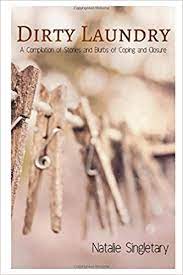
What inspires you to write a particular story? Let’s start with Dirty Laundry, which is a great title and I love the cover illustration of the laundry line.

Dirty Laundry was a compilation of poems I had written over time when getting emotions and thoughts out during difficult portions of my life. There are some poems that are gut-wrenching even now when I read them in preparation of choosing which to read for our Authors’ Sunday Event.

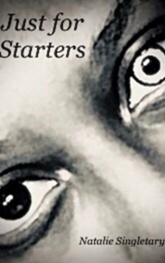
What prompted Just of Starters? Again, the desperate eyes on the person’s face pull the reader in. How does that play into the story’s arc?

So Just for Starters was actually a flash fiction and e-book class assignment from my time at Full Sail University. It’s a supernatural compilation of flash fiction and is free to download on SmashWords.com. It mentions about five to six different perspectives on a bigger problem that the universe is having with werewolves. It’s also a part of a trans-media experience that can be found on my website.

Diamond Trilogy: A Dramatic Miniseries seems also to be a collection of short stories. Am I correct? Do you prefer to write short stories? How do you keep them from growing into novels without making the reader feel as if something is missing? Is it because you also write poetry?

The Diamond Trilogy: A Dramatic Miniseries is a three-part series in one, written in script form. It was written as a stage play of sorts. From what I’ve gathered, it being in script form helps the reader be a part of the story. I give them a setting, and the readers are able to fill in the rest. Writing short scripts is only second to poetry for me. I have yet to publish a novel, though a couple are in the works.

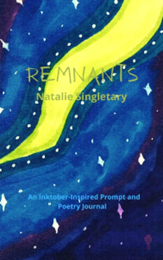
The cover of your last book, Remnants, appears to be a piece of Vincent Van Gough’s famous painting “Starry, Starry Night.” Is that correct? This is a book of poetry, correct? What inspires you to tell your story poetically as opposed to prose?

The cover of Remnants is actually a card I drew with alcohol markers when I was doodling one night. You’re not the first person to bring up “Starry Night” when they saw it, though. I absolutely love space and astronauts and was toying around with what I could do with my markers and cards. Many of my journal covers that I have designed under ObCon Writing/Natt3r Creations have been the work of my alcohol markers. I love the way that they can be blended with each other.

It is, in fact, a book of poetry of sorts. One of my classmates and I have participated in Inktober, an artist challenge, for the last three years. Instead of using our ink to draw, we use it to write and hold each other accountable every day. The challenge happens every October. Remnants is the first compilation of our Inktober endeavor. I turned it into a prompted journal that has, not only my poetry and flash fiction attached but also leaves lines for the reader to write their own. I love telling stories with minimum context because it forces the reader to fill in the blanks themselves. 

          What are you working on now?

          I am currently working on an Inktober novel challenge, as well as another book of poetry. I am also turning The Tombstone Confessions, a spooky novel by Casper Luna, into a working script. He will also be at our event on the 29th, promoting his book. Then there is the previously mentioned dragon series that is in the works.

          What do you do to rewind?

          I enjoy crocheting, making blankets out of discarded hoodies, and drawing and designing journals. I also make wrap-around skirts and zipper bags. I love creating in most forms, to be honest. I’m looking to get back into dancing in the near future as well.

          Thanks for being on my blog. Please add any other information I didn’t cover. Sarah

          Thank you so much for your time, Sarah! I look forward to seeing everyone on the 29th!

You Think You’re Busy? Try doing all Rose Cushing Does in a Day.

I seem to have the busiest people to have on my blog. Whew, try doing what Rose does with her life. Not only does she write books, she runs a horse farm, writes and produces a podcast, participates in a critique group, and has just started up a publishing company. Whew, makes me want to take a nap just thinking about it. I bet she even cooks the meals at her house and cleans while the food is in the oven.

 Hey there Rose. Please start with a bit about where you grew up. It’s a place that I now find dear to my heart. I was enchanted to hear about you walking over the Bridgeton Bridge across the Neuse from downtown New Bern.  How many stories came to your mind as you made that journey? It reminds me of the walk I made most days in the small town where I grew up. We kids were charged with walking to the Post Office/General Store to get the mail every day. We were given a dime to spend on candy. How about you?

I grew up on Half Moon Road, a dirt road in Bridgeton. It was out in the country and every Saturday we made the weekly trip to “town,” New Bern to get groceries, pay bills, that kind of thing. When I was old enough, my mom let my friends and me walk to New Bern across the Neuse River Bridge. The river in New Bern is about a mile wide so it was a beautiful stroll into a thriving downtown. My friend and I would window shop, walk around and look at new fashions, have lunch, and take in a movie over at the Masonic Theater and walk home. (As you may know, the bridge Rose is talking about no longer exists. ed)

You didn’t start out as a writer, and I don’t think you’ve given up your other endeavors. But they do all seem to have been creative in one way or another. What other artistic endeavors have you pursued?  I love horses! So when I got a job at a newspaper as a marketing director, I sold ads to trade for teaching me to write. I loved every minute of it. Ken Ripley, the Editor of the Spring Hope Enterprise, not only taught me to write but also taught me graphic design and layout. I was soon publishing the first equestrian magazine in North Carolina, Carolina Hoofbeats. I moved from there to a weekly equestrian television show, showing on channel 28 in Raleigh for about years. Carolina Hoofbeats TV. This was moved to streaming networks as technology grew and is still available on Farm and Ranch TV. Then onto Equestrian Expos, an equestrian podcast Today’s Horsewoman and COVID hit. Put me out of business for the most part. So once again reinvention.

I wrote a book, Fortunate Tides. I wanted to do something different as I had only written non-fiction. I got it published, made a thousand mistakes, and realized how hard marketing your book is.

How did you come to be a writer? Were you always making up stories? Or watching people to see how they differed from each other?  I took a class at the community college on magazine writing. Submitted my story to the local newspaper and the editor hired me to write a bi-weekly column. Soon I was writing features, planning special sections, doing graphic design and management.

How did you become a publisher?  What kinds of books do you publish? Do you do any children’s books? It was a logical evolution to publish. I have published magazines for years. I was the President of Triangle East Writers for a year. While serving I built the group up, did a six-workshop series and raised enough support funding-wise for them to become a 501c3. Since they were in good shape, I decided it was time to pursue this dream. There has always been magic in something in print becoming a paper you can hold in your hand. So often, it is hard for people to get their work in front of a publisher or an agent. I wanted to open new doors. So, I became a traditional publishing company. Authors do not incur any fees with me. I have an extensive marketing background and assist all my authors in their marketing strategy, book tours, etc.  And, yes I will look at children’s books.

Please tell us a bit about the books you have written? Their titles and themes? Their age ranges? Genres? Dates they were published? Where they are available? Cover photos, please. A little bit about how the book came to you.

Fortunate Tides was self-published in 2021. It wasn’t on the market for very long due to all my errors. I took it off the market and retooled the original story to become Chasing the Wind.

Chasing the Wind was published by Cushing Publishing this month and will be launched on October 16! I am very proud of it and excited about the launch. Available on Barnes and Noble and wherever good books are sold. https://www.barnesandnoble.com/w/chasing-the-wind-rose-h-cushing/1144145994?ean=9798988957546   

Both books are Contemporary Women’s Fiction, Adventure with a dash of Romance.

How do you come up with your podcast episodes? Whom do you do the podcasts about? And why do you choose the particular events/people to work with? How do people learn about your service and what do they have to do to an interviewee? Please give us the link to your service.

I look for podcast guests with stories that catch my eye. I don’t want their job resumes. I want to know about them as people. Make me want to know your story, about you, etc. My podcasts are available on every major streaming network in the world, and we enjoy an audience that is world wide.

I choose events and people because I like them, I believe in what they are doing. I like to give new authors an opportunity to get their books out there in the world. I encourage people to write to me and tell me about their work, their books, themselves and see if we can setup an interview. My podcasts can be found at: https://www.buzzsprout.com/1976358/share Carolina Writers Speak

Speaking of Writing https://www.buzzsprout.com/2012980/share

While you do or have done all the stuff you already do, did you get around to having children of your own? I know your handsome devil helps you out a lot, but what else does he do? I believe you told me he also rides horses. Makes him a good person in my book.

In my first marriage I had a magnificent son, James Baxley who lives in Virginia. He has blessed me with 4 grandchildren and 7 great grandchildren! Rodney, my husband, is a Maintenance Manager at AAF Flanders in Smithfield. In a previous marriage he had 4 children and 7 grandchildren! I am very proud that Rodney enjoys doing most of the things that I do so it’s fun to do together. He does ride horses, we raise them as well.

What else do you two get involved in?

We also garden and love to camp and cook!  Rodney is a technology buff.

 Be sure to stop by Rose’s table on October 29th where Rose will be selling her books, in addition to talking about her podcast service and her publishing company. But sadly, she won’t have any of her horses there. Maybe some pictures for us to ooh and ahh over.  Sarah

Erika Bud Loves to Write about the Places She’s Visited

Erika Bud, World Traveler contact@bigworl
(815) 200-4977
 
Inspiring parents and kids to travel abroad with adventurous children’s books and motivational podcasts. To learn more or to sign up for discounts and updates, go to: www.bigworldpub.com
 

Erika has traveled to and lived in many countries because she thinks the world is cool. Starting at age 18, she has lived in, or traveled to, 30 countries. Before she settled down to raise her family and publish her books, she worked as an au pair. Now she’s focusing on teaching children about at least some of the places she’s lived and traveled.

Check out Australia

Her first book, Mission to Australia, is about an intrepid foursome of young travelers visiting Australia. The group of children is interesting in its own right since one of the travelers must use a wheelchair, but is undaunted by difficult places to access. The group represents many different cultures and ethnicities.

Questions for Erika

What compelled you to dream of visiting and living in different countries? Honestly, I have no idea. I did not grow up around people traveling to other countries. I just thought it sounded interesting and after visiting my first country, I enjoyed learning about the culture, history, and seeing the new sites so much that I wanted to see as many as possible.

 How did you become an au pair? What hoops did you have to jump through to? There was a program I found online. It was a long time ago, so I don’t remember the details, but I know I requested to be an Au Pari in Spain. I believe I was provided with some information about families who were interested in me, and it was up to me to select. My grandma spoke Spanish so she spoke to them, and that was it. I requested the time off with my boss and I headed to Madrid.

 Did you have a friend who inspired you? Or did a book lead you in that direction? Neither. I did not have any friends or family who traveled abroad. In fact, several of my families asked me why I wanted to go out of the country. I really have no idea what inspired me. I’m assuming seeing certain movies or pictures of places around.

Did you have to convince your parents that it would be safe for you to pursue this dream? Yes, but I was 18 when I first traveled, so there wasn’t much they could do to stop me. So, they chose to support me instead.

How did you pick the countries you wanted to visit? If you’re referring to Spain specifically, I didn’t do a lot of research. I just knew I wanted to go and since I had the program looking out for me, I thought it was a safe option. For countries since Spain, I research how safe it is, the best time to travel based on the weather, and what sites I want to see / experiences I want to have (i.e., all tourist sites, more cultural experiences, art, etc.)

What research did you do about the countries you wanted to visit?

I chose Spain because I believed I was Spanish (only recently learned I am Mexican) and I wanted to learn more about my heritage. After that, I started looking into the countries that I had heard about from people I have met on my travels, through people I have met through FB/FB groups, and now through my travel podcast.

What were your duties? It honestly wasn’t a good experience, so I usually don’t go into details as I don’t want to deter others from doing it. I honestly don’t believe my situation was the norm. I was supposed to teach the children English, but I only did this once. The rest of the time was spent cleaning and taking care of the kids. I believe my host family took advantage of au pairs, unfortunately.

Do you still keep in touch with the families? No.

Did you stick to just English-speaking countries? If not, did you already know the host country language? I spoke a little Spanish because of what I had learned in high school, but I was not fluent. I definitely spoke better Spanish when I came back though!

When you decided to be an author/publisher, did you go to school to learn how? My degree is in Business Administration with an emphasis in Marketing. I did not go to school specifically to be an author/publisher. I spent a long time doing my own research, joining author/publishing groups, taking online courses, and asking a lot of questions. Luckily, there are some authors/publishers who are happy to help new authors/publishers.

And do you plan to do more traveling with your family? What was your son’s reaction to visiting other countries? I believe you said he’d already visited two. Oh yes! We just got back from two weeks in Ireland. He had a wonderful time and came back with so many memories and experiences. When we asked him his top three experiences, he could only narrow it down to eight. Now we talk about him possibly doing summer camp in another country. We still have a long time to think about that, but that’s how much he loved the experience.

My son was only five when I first took him out of the country, so he doesn’t remember it as much, but he loves looking at the pictures and I know it’s helped to make him interested in other countries and cultures.

What is the next book in the series? Ireland!

And, lastly where are you and your family going next? This is tough because we keep getting different ideas, but I think it’s going to be southern Italy.

Lily Unleashed Is a Winner!

Lily Unleashed

Front Cover

Jo Anna Dressler Kloster has written a heart-wrenching and compelling middle-grade novel which addresses the ever-present angst and problems of being on the cusp of teendom, such as finding oneself feeling physically attracted to a close friend, or understanding the changes her former best friend is dealing with.

The main character, Lily Grabowski, who loves her English class and her extraordinary teacher, Ms. Stadler, is dreading discussing a story she wrote for a class assignment because it’s about her beloved German Shepard agility dog who died just after winning their last agility competition. She thinks it’s her fault the dog died. But she ends up finding a new dog that needs her love. Unfortunately, the dog is from a puppy mill and has severe emotional trauma issues. With the love and support Lily gives the dog she names Cagney both learn to grow stronger and more confident.

The book is well written and quite compelling, showing plenty of growth for all the characters in the story, both two and four-legged. Even the bit players in the story show compassion and emotional change, with much grace and charm. There are pithy study questions at the end of the book to help teachers further discuss the topics with their students.

The story takes place in Green Bay, Wisconsin, where Ms. Kloster and her husband lived for many years. They now live in the much warmer climate of New Bern, NC, though they still root for the Green Packers football team.

BIBLIO: 2022, Empty Cages Press, Ages 8 to 12, $13.99.

REVIEWER: Sarah Maury Swan

FORMAT: Middle-Grade Fiction

ISBN: 979-8-9855316-0-2

Jo Anna Kloster and Cagney
  1. What prompted you to incorporate a story about Puppy Mill dogs into your coming-of-age story? Answer: The story was always about dealing with the residual behaviors that my puppy mill survivor, Cagney, had.  This story was completely inspired by Cagney.  Over time his behaviors became more challenging including extreme separation anxiety and being very protective of me and of our property.  I started writing about Cagney during Writer’s Workshop with my elementary-age students.  In every writing class I had ever taken, I was always told to write about what I know. So that’s what I did.  And the students had so many questions and concerns about Cagney and this thing called “puppy mills.”  I decided a book needed to be written to help them understand why puppy mills exist (to feed the pet stores that sell puppies) and what we can do to help end this pipeline and cruel industry of factory-farming of dog. As far as the storyline goes, that was all made up.  Yet, so much is based on my life and experiences.  I needed to create a book, a vehicle, that would inspire young people to speak up for these voiceless dogs and victims of greed. 
  2. Tell us the process of writing this book. Answer: I don’t know if I had a process. I did extensive reading of middle-grade novels to find ones I loved and then I dissected them to see what the author did that drew me in and made me like the book.  Some of my favorites are Kate DiCamillo and Barbara O Connor as well as Sheila Turnage.  I love humor and animals, especially dogs, so I read lots of books about dogs.  I also read lots of research about puppy mills and about how living in horrid conditions at the mills affects dogs emotionally. I also took lots of writing classes, found coaches online, as well as critique groups, to guide me and offer suggestions.  My home library has a collection of books devoted to the writing process and how to create conflict and storylines that pull the reader in.  I guess you could say I am self-taught and earned a seat-of-the-pants writing degree from the school of many mistakes. 

3. How long did it take you to finally get it published? Answer: Ten years!  I guess I’m a slow learner.  Or a late-bloomer, just like Lily.  But I didn’t have a lot of time to devote to writing.  I worked 12-14 hour days as an elementary teacher who planned a lot of special projects that took lots of time.  So, each summer I’d spend hours working on my manuscript.  When it was all said and done, I had written six full revisions.  According to Newberry Award-winning writer Sheila Turnage, that’s about right.  So, I feel like I’m in good company.  I actually enjoyed seeing the story evolve and finding ways to create greater challenges for my characters. 

4. Did you have other writers look at it to tell you what was good about the book and what needed fixing? Answer: Absolutely! When I was living in Wisconsin, I belonged to the Society of Children’s Book Writers and Illustrators and had several critique sessions with editors and accomplished writers.  And when I retired the state chapter of SCBWI for  North Carolina directed me to a local critique group that had room.  And my husband, Patrick, was my first and last editor.  Poor guy was subjected to multiple revision readings of each chapter. He was there every step of the way. 

5. Why did you decide to go the “Indie” route instead of the “Trade Publisher” route? Answer: I actually submitted the manuscript to quite a few trade publishers.  But the more I thought about it, the more I realized I needed control over this story.  It has a purpose: to educate young readers about puppy mills and to inspire them to action.  I wasn’t ready to release it to someone who would start changing it  – to what they think it should be and possibly dilute the message or change the story.  And also, to be gentle, it’s not one of the topics that seem to be “hot” in the market these days.  This was my baby, I knew what it needed to do, so I became incorporated as Empty Cages Press LLC and published it myself. Now it’s all rolled into a campaign, Empty Cages Press, whose goal is to educate others “until every puppy mill is closed.”

6. Is your style of teaching similar to that of the main character, Lily’s favorite teacher, Ms. Stadler, who is very inspiring to anyone reading about her? Answer: Yes, Ms. Stadler and I would get along well.  This is one area that is very close to home.  I was a teacher for twenty-five years.  And spent lots of time learning how to be a better teacher.  So, yes, I had the chimes in my room.  We did lots of group work.  And I used lots of music and lots of humor that my students seemed to like. I was a marshmallow when it came to discipline just like Ms. Stadler. I get that from my mom. 

7. What do/did you teach and are you still teaching here in New Bern? Answer: I started as a Special Education resource room teacher, then split my day as resource room teacher and Reading Recovery teacher after getting certified for that. This reading program is amazing and has nonreading first graders actually reading inside of twenty weeks with solid skills to last their lifetime. Then I moved into the classroom as a general education teacher moving among first to fifth grades.  Finally, I ended my career as a teacher in the gifted and talented department working with grades K to 6th.  Presently, I am an ESL tutor working at our local high school with students who are classified as refugees.  It’s very rewarding. 

8. Campaigning to get rid of Puppy Mills has become a passion of yours because of your dog Cagney. Answer: Tell us a bit about Cagney and how you came to get him. That’s an interesting story. Some close friends had recently acquired a dog from a mostly reputable breeder.  It was a Maltese which we had never heard of. We fell in love with Bogey.  And then this couple adopted a tiny seven-pound puppy-mill-rescue named Cooper. He had been used as a breeder male.  He was quite timid and insecure – and didn’t take to new people.  Well, the Smiths needed doggie sitters one weekend. We watched Bogey and Cooper and had a great time.  In fact, Cooper really took a shine to Patrick.  Well, when the Smiths saw how well Cooper did with us, they shared that good news with Mary Palmer, the president of the North Central Maltese Rescue that saved Cooper when she called to see how the little guy was doing.  You know where this is going.  So the next day, in our email inbox was a picture of the brightest shining face of a tiny Maltese named Cagney.  And the rest is history, as they say.

9. Tell us what you did to socialize him and how successful were you. Answer: We tried doggie training classes at our local PetSmart.  Cags was always the smallest dog there and usually the most timid.  I also had people come to the door and play the game Lily plays with Cagney, the Go to your bed game when the doorbell would ring.  It was somewhat successful at first. But you must be consistent which is not easy for me.  And, of course, the biggest mistake I made was babying him….just like the way Lily refers to herself when she gives treats to Cagney after he barks at someone. I guess there are just some dogs that will always be hesitant with strangers or be protective when people come to their home.  Cags was that way. 

10. What can other people do to help get rid of Puppy Mills?  Answer: STOP BUYING PUPPIES FROM PET STORES. That’s the first and foremost thing you can do.  Dry up the demand.  And tell others why they shouldn’t purchase puppies from pet stores. Also, people can write editorials to newspapers, and post this info on their social media. It’s the only way.  And then our elected officials will hear this rumble and be more receptive to requests to ban the sale of puppies at pet stores. 

Lily Unleashed is available at Next Chapter Books, 320 S. Front Street, New Bern, NC 28560, https://nextchapternc.com.

Amazon Books. I had a problem just adding the link to the page here, so just look it up at: https://amazonbooks.com

Ms. Kloster’s website is: https://www.emptycagespress.com/ and her Facebook page is: https://www.facebook.com/EmptyCagesPress

An interview with the Amazing Joan Y. Edwards

Joan Y. Edwards smaller web AE9Z7443


Joan Edwards is a very encouraging person. Feeling down about your work, or yourself, or life in general? Let Joan know. She’ll do her best to perk you up and urge you on to reach higher. Her latest book, Joan’s Elder Care Guide, came out recently, so she’s busy promoting it.

But I’m sure she’s also working on her next project. Let’s see what that is.

SMS: Please tell us about how you came to be a writer, but first let’s get the details about your early life.

Were you born in South Carolina?

JYE: I was born in Wilson, North Carolina. However, I never lived there. My parents lived in Georgia and came back to Wilson so my Grandmother Sue Bruffey could help Mother with me. We lived in Tucker, Georgia until I was 7 years old. Then we moved to Falls Church, Virginia. I lived there until I went to Western Carolina College in Cullowhee, North Carolina in 1958.

SMS: Are you one of many siblings or did you get your parents all to yourself? If you have any siblings, where are you in the line? How many boys in the family and how many girls? Describe a bit of your family life. Chaotic? Joyful? Strict? Laidback?

JYE: I was one of four children. I had one brother and two sisters. My older sister, Judith, died in 2012. I was the middle child until my younger sister, Janet was born fourteen years after me. My brother, Butch, is five years younger than I. We lived on a farm in Georgia for a short time. My mother had a chicken house in Falls Church. My daddy bribed her with that to get her to move to Virginia. I jumped Double Dutch jump rope, played hopscotch, hide and seek, read books, and put together jigsaw puzzles with my siblings and friends. Our family played the alphabet game, finding license tags from each state, and counting red convertibles when traveling. We made up plays and acted them out.

SMS: What kind of school system did you have? I, for instance, spent most of my grade-school years in 3-room school house. Was your school bigger? Did you have good teachers?

JYE: I went to St. James Catholic School in Falls Church, Virginia from second to eighth grade. It was a very good school. They gave us exams at the end of each school year. At the end of the third grade, I got the mumps and contracted a sleeping sickness. I missed the end of year exams. It’s funny because I didn’t remember that until it was time for the fourth grade exams. I told my teacher: “You can’t give me the fourth grade exam yet. I haven’t taken the third grade exam”

I asked her why hadn’t I taken the third grade exam. She didn’t know. So Mother explained what had happened. Probably the fever I had from the mumps instigated it. After two weeks, I was fine.

SMS: I believe you were a teacher for a number of years. What inspired you to do that? How did the teaching spur your desire to write stories? Or did it? I know you wrote one picture book about a duck who liked to play music. Did you read it to your students? Tell us the name of your book. And what inspired you to write it?

JYE: When I was a teenager, I loved babysitting with young children of school age. I planned parties and activities. I babysat a lot. I also enjoyed teaching my cousins how to do things. In school the teachers would ask me to read the geography book because I made it come alive for them. I took care of my brother and I also took care of my younger sister. We wrote plays and acted them out for our families and friends.

When I lived in Tucker, Georgia, my environment was great for hearing stories and telling stories. Mother read to us from Grimm’s Fairy Tales and Andersen’s Fairy Tales. These were thick books with only an illustration at the beginning and a few sparse black and white illustrations in the middle. There were no picture books back then. People who babysat with me told me stories. I made up stories. When I was five years old, I made up the story of Flip Flap Floodle.

When I taught school, many times I would tell them Flip Flap Floodle. They loved it and begged me to tell them other stories. So I had to do spur-of-the-moment stories for them. I made up characters and put them in weird situations. I made up the ghost stories The Golden Arm and The Day I Turned My Brother into a Monkey. They laughed and laughed. Afterwards I had them write stories and draw illustrations for them.

web 96 res red Flip cover color

I tried off and on for many moons to get Flip Flap Floodle published. I got many rejections. After I retired, I promised myself I would submit it to publishers for 5 years. If at the end of 5 years, no one said, “Yes,” then I would self-publish it. Everyone said, “NO.” So in 2004 I self-published Flip Flap Floodle through BookSurge. Luckily for me, color print-on-demand came out just in the knick of time for me. I have made many presentations to elementary school students explaining the process of how I changed the illustrations and how I used the internet to help me improve my drawings of a frog and Mr. Fox. I drew a rocking chair for Flip’s grandmother to sit in. The proportions and slant of the rockers were all wrong. I took a rocking chair that I had and placed it in front of me. I said, “Rocking Chair, you’re gonna sit there until I can figure out how to draw you right.”

And it did.

I’ll share this with you. I had all my illustrations and text formatted for “landscape” view. After I paid my money and signed my contract, BookSurge said, “We don’t do landscape books.”

Horror of all horrors. Talking about pep talks. I had to do quite a bit of talking to myself to get the energy to redraw all the illustrations in “portrait” view. This was what I said to myself, “Joan, each time you redo an illustration, you’re making it better and better.”

SMS: Tell us how you came to write your current book, Joan’s Elder Care Guide. web 96 res cover Joan's Elder Care Guide by Aidana WillowRaven

Did you consult geriatric care providers? A lot of it is personal experience, I’m sure. Do you feel that experience gave you a way to make your guide more relatable?

JYE: I took care of my mother, Ethel Darnell Bruffey Meyer for fourteen years. Through trial and error I found ways that worked. For at least two years, I wasn’t able to go anywhere out of town. There were no books about elder care. The internet wasn’t like it is now where you can put in almost any medical condition and find a definition and possible cures. My teaching experience helped me realize that I wasn’t leaving the substitute caregivers enough information. Once I started to leave them what my mother could and couldn’t do and things to watch out for, things went better. I put what I did plus I added other things I discovered through research so that caregivers would have the information they need at their fingertips.

SMS: How are you marketing your book? And are you just marketing locally or are you using contacts around the country? Any chance of having it translated into other languages to help families with their elderly relatives?

JYE: I’m marketing Joan’s Elder Care Guide on Amazon, Facebook, Twitter, and through conferences that I attend. I also do presentations for groups that work with the elderly. Our church has my book in its gift shop. Oh my, that filled my heart with joy. Editing the book left me exhausted. I’ve spent the last three months spending time with my family and friends to regain my inner strength.

I’m willing to travel to promote my book, but that hasn’t happened yet. I feel sure it will in the future. I have not heard anything about its being translated into other languages, although that would be quite an honor. It will come out as an E-book at the six months or one year mark. I think that will help many people access the parts they need quickly with the E-book’s search capabilities.

SMS: Tell us something about your publisher. How did you find her? And what kinds of books is she looking for?

JYE: I found 4RV Publishing during Muse Online Writers Conference in October 2010. I pitched Joan’s Elder Care Guide to Vivian Zabel the owner. She asked me to send a proposal and the first three chapters. They offered me a contract in 2011 and said they would publish it in 2015. It is a small traditional publisher in Edmonton, a suburb of Oklahoma City. http://4rvpublishing.com/. It was named the Best Edmond Book Publisher of the year for four consecutive years: 2012, 2013, 2014, 2015. Submissions are closed for Children’s books now. Submissions are open for Artists, Illustrators, Short Stories, Tweens & Teens, Young Adult, New Adult, Fiction, Nonfiction, and Biblical Based. They used Ingram’s Print on Demand service for Joan’s Elder Care Guide.

SMS: You encourage lots of people with your blog, not just to continue writing and submitting, but also to expand their writing horizons by starting blogs or doing other things related to writing. How do you find the time? What blogs do you have other than “Never Give Up”? Do you cut yourself slack when you don’t finish all your projects for a given day? What are your comfort food and/or activity?

JYE: Thank you for saying that I encourage lots of people with my blog. When I first started my blog, I didn’t know what I would write, but I did know that it would come from the heart to help those who read it keep on going and never give up. I’d like to inspire them to learn what they need to learn to get where they want to go towards their life goals. In 2010 after I came back from a writing conference and an all week workshop, I wrote about what I learned. That’s when my readership spiked upwards big time. It’s a great idea to give yourself some slack when you don’t finish all your projects in a given day. Loving, forgiving, and accepting yourself is what I believe God would want you to do. I try to do that. Sometimes I am harder on myself. I believe it’s important for you to control your blog, not for your blog to control you. While I worked editing Joan’s Elder Care Guide, I didn’t write as many posts on my blog. I plan to get back into writing at least four posts a month. It is healing for me to write posts for my blog.

SMS: How did you come to start the PubSub group? And how did you find all the people who’ve signed up? I know there are people from all over this country, but also in England, who are members. Are there members from elsewhere?

be-smart-submit-pub-sub

JYE: In 2009, I realized that I had about ten manuscripts written and that I hadn’t submitted many of them. Only one or two. Of course, I was concentrating on the care of my mother, so that was a good reason for not submitting. But I wanted to submit. I thought if I could get a group of writers to submit a book at the same time as I did, that it would encourage and challenge me to submit my manuscripts, too. That’s why I had a certain date in mind (third Friday of the month) for the group…PubSub3rdFri. That was good for me, but then people said they didn’t want a specific day to submit their work. So I knocked out the words – 3rd Fri – for the group and started calling it, “Pub Subbers.” When you submit your work, you are Pub Subbing.

For a while, we only had about 4 members. Now we have 30 members! Only 2 or 3 have left the group. Pub Subbers is on my blog. That’s where people found our group.

Members believe that the more manuscripts they have in the hands of editors, agents, and contests, the better chance they’ll have at being published. Each time a member submits, he improves his skills in writing, submitting, and marketing. Each submission gets him closer to publication.

In this group, members ask others for suggestions about writing and marketing. Members rejoice with you when you receive a “YES.” They also encourage you when you get a “NO.”
Automated reminders are sent for Week 1, 2, 3, and 4 of the Pub Sub process. Automated reminders are sent out to ask members for their goals at the beginning of the month and a recap of their progress on the last day of the month.

For an invitation to join, please send an email telling why you’d like to join Pub Subbers to joanyedwards1@gmail.com/.

Pub Subbers

Week 1

Week 2

Week 3

Week 4

SMS: What’s next on your agenda? Are you working on another book? Planning a trip to Jupiter? Touring the world in a hot air balloon?

JYE: I love your questions! I’d love to fly in a hot air balloon. I rode in one that was tethered to the ground one time. I am working on the illustrations for chapter book Larry, the Terrifying Turkey. I have several choices for the project to check for necessary revisions before submitting to a publisher or agent:

  1. One young adult novel: Immigrant Heart
  2. Two screenplays: Against the Odds and The Perfect Couple.
  3. Picture book, Aunt Sophie’s Biscuits, Porky Wins the Race
  4. Chapter books: The Golden Arm, The Day I Turned My Brother into a Monkey and Messy Marvin

SMS: Thanks, Joan, for taking the time to fill us in on your projects.

JYE: You’re very welcome. I am honored to be a guest on your wonderful blog. It’s fun to read your reviews of books. You give the essence of the stories and make us want to read them.

SMS: I know you have FaceBook and LinkedIn accounts, but what others do you use?

Readers, if you’re interested in following Joan and her endeavors, please check out her blog by following the link I’ve provided here. Please be sure to check out her books on Amazon at her author page:

web 96 res red Flip cover color

Flip Flap Floodle Will Flip’s song save him from Mr. Fox? Will he give up or keep on playing his flute?

Amazon

Barnes & Noble

web 96 res cover Joan's Elder Care Guide by Aidana WillowRaven

Joan’s Elder Care Guide

Empowering You and Your Elder to Survive

4RV Publishing

Amazon

Barnes and Noble

Blog: https://joanyedwards.wordpress.com

Facebook Author Page

Facebook Group for Bloggers, Authors, and Illustrators: To Market To Market

Goodreads

LinkedIn

Twitter: @joanyedwards @tomarketsuccess

Website: www.joanyedwards.com

++++++++++++++++++++++++++++++++++++++++++++++++++++++++++++++++++++++++++++++++++

Next week I’ll have more reviews.  Let me know if you’d like me to do an interview of you and your work. Sarah Maury Swan