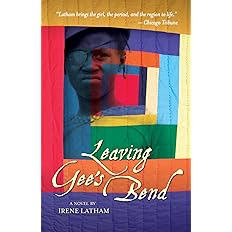
Ludelphia Bennett is a strong-willed ten-year-old, and boy, do you want her on your side. You especially want her on your quilting team. She likes to tell stories with her bits of fabric, and while she tries to save her pneumonia-struck mother on what might be her deathbed, Ludelphia stuffs her fabric scraps and her precious needle into the pocket of her burlap-sack dress so she can cross the river on the barge that’s linked to a cable to the other side of the river. Her goal is to get to the town of Camden, Alabama, just across the river from Gee’s Bend, and fetch the doctor who might save Ludelphia’s mother’s life. Unfortunately, the amount of rain Gee’s Bend has just gotten makes the river so high and so fast it snaps the cable and sends Ludelphia rushing downriver and knocking her overboard. Along her way to the town, the girl runs across the mean old woman, Mrs. Cobb, who is convinced that the people in Gee’s Bend are responsible for her niece’s and her husband’s deaths. And since her husband was the owner of the land the people of Gee’s Bend farm, she feels she has the right to take all the land and everything the people own as payback. She’s convinced that Ludelphia and her neighbor, Etta Mae Phillpot, are witches who killed her niece and husband. The story is well written, historically accurate, and spellbinding. Quilt makers, in particular, will relate to Ludelphia’s deep love of telling stories with fabric and with the calmness quilting brings to her soul.
BIBLIO:2010, New South Books, Ages 10 and Up, $11.95.
If you ever want to see a tiny human dynamo, meet Anechy Padron who immigrated from Cuba. (She and her illustrator are pictured above.) She immigrated with the help of her mother and brother, who were living in Tampa at the time.
While in Cuba, Anechy wrote a children’s book about a Chihuahua, Patti, who meets a feral cat, Barci, that lives in the “City of Cat.” But now that Anechy lives in the U.S.A., she thought it would be nice to write the story in English as well.
The story is charming and well-written. Children will relate to the animals and cheer them on. And the children will learn how to be better people and how to care about all creatures. And they will also learn a bit about life in Cuba.
Interview Questions
Please tell us how to pronounce your name. I believe you told me that Anechy is a nickname. What is your full name?
My full name is Adianez Padrón Ramirez, but my brother gave me the nickname of Anechy, and it stuck forever. A friend created a little game to pronounce my nickname, you say Aww(yawning), point at your knee, and finally you sneeze. Aw-knee-chis!
Did you grow up in Havana? Or in another part of the island?
I was born in Santiago de Cuba, on the east end of the island. Then, my parents moved to Holguin for a year and a half. But at age four and a half we moved to Havana, where I lived for 25 years, until I came to the States. My parents were in the military. They moved a lot.
Where did you go to college? In Cuba or America?
I studied accounting for five years at the University of Havana. That wasn’t what I wanted. I wanted journalism, language, anything that had to do with writing and arts. But my mom wasn’t supportive then about my being an artist. While in college, I went to every literary event or class I could find. Often times people would find it odd that I was there while studying accounting.
How did you get to the United States of America?
Long story. We would need a whole new interview. In sum, I followed my family. My brother rafted out of Cuba in 2000. In 2008, he became a U.S. Citizen and applied for family reunion. My mom was granted a visa in 2009, but I had stay in Cuba for one year before I got my visa in 2010. It was a long process to get out of Cuba. Having a U.S. Permanent Visa wasn’t enough for the regime. In 2010, there was a law in Cuba that I had to give all my properties back to the Cuban government, and I had to pay 550 dollars for a “white card,” which I called the freedom card.
Have you always been a storyteller?
I was always an avid reader. As a small child, I couldn’t go to bed without a story. But I wouldn’t fall asleep until the end. My dad always fell asleep before. Then, I’d walk out of the bedroom with the book and tell Mom: “Mami, papi se durmió” Mom, daddy fell asleep. At age 10, I was reading Edgar Allan Poe and Guy de Maupassant. I started writing poetry and short stories in 6th grade when I was a member of a book club with five other girls. I couldn’t stop writing after that.
What compelled you to write this book?
When I lived in Havana, I was babysitting a 3-year-old boy named Richy. (He just turned 18 years old.) I was also performing for children as a clown and a puppeteer. I was always writing rhymes and little stories for my live shows. One day, Richy and I were walking Isabella a.k.a. Patti in the story, and a little cat came to us. She was very friendly for a street cat. And even more surprising, my chihuahua liked her. I named the cat Barcina. Richy and I started dreaming and making up stories about this cat. I brought Barcina home but she did not like it. So, I started writing about her and imagining what my chihuahua and Barcina would be saying about me, and the neighbors. Then, I added my friends and their dog to the story. Richy and I loved this fantasy. Richy got me into this book, and I love it.
What are the names of the dog & cat?
The heroes of my book are Patti and Barci, a spoiled Chihuahua and a street cat.
How did you come up with the names?
My chihuahua had many nicknames or terms of endearment, one of them was “puti” actually not a very nice word in Spanish, but it is endearing to a dog in Cuba. For the book I changed it to Pati. When I started editing the book, I added another T to honor my friend Patti, who helped me get my new dog Maya. Barci is short for Barcina, which means mutt for cats (Moggy).
In the story, the cat lives in a place called the City of Cats. Is there such a place in Cuba? In Havana? Do other Cuban cities and towns have such gathering places for the feral cats? Are they monitored by humans?
x
I lived in a 12-story Russian building in the newest part of Havana. We had a huge basement where the feral cats slept at night. I called the basement The City of Cats, it was a damp, dirty, and flea-infested place. I felt bad for those cats. There are places like that all over Havana. Very sad. On the other hand, they kept the mice population under control. In the process of re-writing the story I changed the setting from an ugly looking neighborhood to beautiful Old Havana, a city which beauty always makes me cry. I put the City under the Cathedral, and the rest is history.
There was a group of ladies in my neighborhood who collected school cafeteria leftovers to feed the cats. They captured injured cats, vetted them, and then found homes for them. But this was just done by good-hearted ladies, there is no organization in Cuba that helps. There is a non-profit from Canada called The Spanky Project. https://spankyproject.org/. They help street animals in Cuba by spaying/neutering/deworming them, and then either release or get them adopted. I learned a little bit more about them on my last trip to Cuba this past January.
I love that you are giving children the chance to learn a new language. It will bring the peoples of our world closer together, don’t you think?
I agree with you. I started learning English at age 11 and French in my early twenties. That opened the world to me. It has made it possible for me to travel, meet people, learn from others, read books that are not available in Spanish, and, mainly, understand that far from different, we humans have more in common than we think.
I know you write short stories as well as books. What is your next short story? Or have you adapted part of this novel into a short story for the upcoming Next Chapter Literary Magazine which has the theme of friends?
Sarah, you gave me a great idea. I was trying to come up with something to write for the magazine. The latest thing I’ve written is the sixteen-character descriptions for books one and two. Yes, I forgot to mention I already have a second part for “The Adventures of Patti and Barci: The City of Cats.” The next book is “The Havana Forest.” I plan to write several books for this series, I just love these characters and I have so much fun with them.
Thanks for visiting my blog, Anechy. I look forward to reading the next saga of Patti and Barci.
Feel free to contact Anechy at anechy7@gmail.com for more information about her book and when it will be ready for you to read.
Had I known what this book was about, I wouldn’t have bought it. But it was given to me by an author who was doing a book signing at Next Chapter Books & Art, our local indie book store in New Bern, NC. https://thenextchapternc.com/.
Though I am not a fan of organized religion, this book, written more or less as a parable, was quite compelling and nicely written. However, some parts of it could have used some clarification.
For instance, the main character, Grey, is an unhappy nineteen-year-old young woman having never gotten over her mother’s death. When we meet her, she’s waking up after drinking too much and sleeping with a young man. Or, at least we think it’s a young man. But later in the story, he appears to be at least in his late twenties.
Grey’s stepfather, with whom she does not get along, tells her about a job opening and strongly suggests she apply for it. She gets the job and begins to turn her life around. The reader, or at least this reader, got the impression that the owner of the coffee shop is in his forties, but a good person who believes in the lessons taught in the Beatitudes discussed in the Bible.
Fine, but then it turns out the man has fallen in love with Grey and wants to marry her. A bit creepy, in my view. Grey’s stepfather is encouraging her to marry the coffee shop owner. Plus, the young man Grey had been sleeping with turns out to be studying to be a pastor, even when he’s sleeping with her. But perhaps I was mistaken, and he was just letting her have a place to sleep when she didn’t want to speak to her stepfather. And, by the way, the stepfather turns out to be a good person.
Still, the story is well told and worth reading. Plus, the lessons told do give the reader pause. We all can learn from the teachings of others either by accepting what’s being taught or by deciding that the suggestions are a bunch of hooey.
In any case, books that make us think are definitely worth reading.
I’m a big fan of spy stories, especially ones that keep the plot ticking right along. That being the case, I happened upon this one at a writers’ event where I was promoting my books as well.
Like me, Dick Totino lives in the coastal region of North Carolina and weaves his magic there.
I happened to be selling my books at an author event he was participating in. As is often the case at these events, we exchanged books. I do hope he liked mine as well as I liked his.
The book is titled The Salesman, but the main character, John Anderson, is much more than a world-class salesman of industrial chemicals. That’s just his so-called day job. And it gives him good cover for his second job of being a “fixer/spy” for the U.S. government.
But he is growing weary of both jobs and hoping to retire in a special cabin near good friends. In the meantime, he has to find his last victim and figure out how to kill the person without getting caught. Not an easy task. Especially since his boss might be involved in trying to kill John’s target. So who is the good guy here and who is the bad guy. Another puzzle for John to put together.
Along the way, he must save his friends and the woman he loves, and catch the other people who are doing bad things. John Anderson is a master of disguise so don’t expect to recognize him on the street. He may actually not present as a man. Or as a young man. And wear gloves when you meet him.
The book will keep you reading, so plan on going to work late the next day.
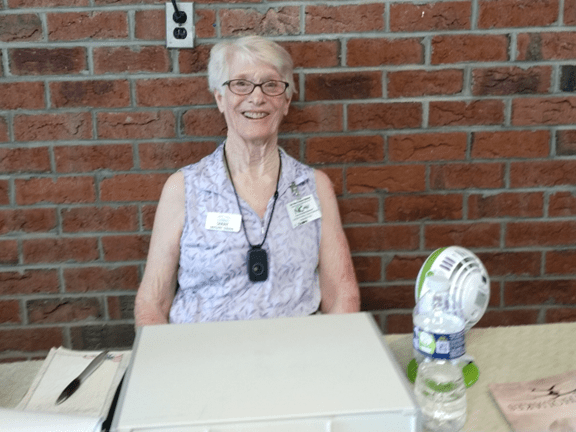
I’m most proud of finding the love of my life 49 years ago and helping him raise his four children. I am also proud of having raised a foal and made him a good riding horse. And I’m quite proud of having published three novels and a collection of short stories since I turned 73. I’m not done yet, even though I’m now 82.
I met Natalie Singletary at the first New Bern Farmers’ Market’ Authors’ Sunday event in November 2022. I believe she has participated in all three of them, if you count the one we’re having this October 29th. When you check her website, https://obconwriting.wordpress.com/, you’ll see the poetry and intrigue she uses in her writing. Plus, her book covers will pull you in. I wanted to open them up right there on her website.
Welcome, Natalie, and thanks for participating in my series of blog interviews. It gives me a chance to be nosy without being considered rude. I noticed you live in Havelock. Is that your birthplace or are you from elsewhere? Tell us a bit about your life, please. What teacher/s inspired you along your journey? What relative? Do you have a partner who encourages and inspires you?
I was born in Marietta, Georgia, but had left there before I was three years old. After my biological mom passed away, my aunt took me and my sister in. She was in the Navy and, when I was seven, was stationed at Cherry Point after a three-year stint in Naples, Italy. I’ve grown up in eastern North Carolina, in the Havelock-New Bern area, being here for a bit over twenty years. As for inspirations, my childhood pastor, Pastor Ryan, when I was young, made me promise I would never stop writing. Thus far, I have kept that promise, and while he was referring to my poetry, I have expanded on such since then, branching into flash fiction, short stories, as well as a couple of novels. One is a young adult dragon series that is in the planning stages currently. To this day, he is still my favorite pastor. I have a few people in my life who constantly encourage me now, my main cheerleader being my sister. She loves chatting about my books and projects with friends and strangers alike.
How does your life journey color your novels?
My first book, as well as my first compilation of poetry, were both pieces I used for coping with difficult situations that were going on at that point in my life.
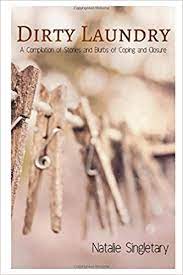
What inspires you to write a particular story? Let’s start with Dirty Laundry, which is a great title and I love the cover illustration of the laundry line.
Dirty Laundry was a compilation of poems I had written over time when getting emotions and thoughts out during difficult portions of my life. There are some poems that are gut-wrenching even now when I read them in preparation of choosing which to read for our Authors’ Sunday Event.
What prompted Just of Starters? Again, the desperate eyes on the person’s face pull the reader in. How does that play into the story’s arc?
So Just for Starters was actually a flash fiction and e-book class assignment from my time at Full Sail University. It’s a supernatural compilation of flash fiction and is free to download on SmashWords.com. It mentions about five to six different perspectives on a bigger problem that the universe is having with werewolves. It’s also a part of a trans-media experience that can be found on my website.
Diamond Trilogy: A Dramatic Miniseries seems also to be a collection of short stories. Am I correct? Do you prefer to write short stories? How do you keep them from growing into novels without making the reader feel as if something is missing? Is it because you also write poetry?
The Diamond Trilogy: A Dramatic Miniseries is a three-part series in one, written in script form. It was written as a stage play of sorts. From what I’ve gathered, it being in script form helps the reader be a part of the story. I give them a setting, and the readers are able to fill in the rest. Writing short scripts is only second to poetry for me. I have yet to publish a novel, though a couple are in the works.
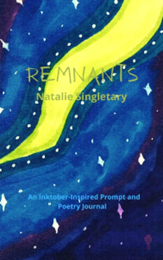
The cover of your last book, Remnants, appears to be a piece of Vincent Van Gough’s famous painting “Starry, Starry Night.” Is that correct? This is a book of poetry, correct? What inspires you to tell your story poetically as opposed to prose?
The cover of Remnants is actually a card I drew with alcohol markers when I was doodling one night. You’re not the first person to bring up “Starry Night” when they saw it, though. I absolutely love space and astronauts and was toying around with what I could do with my markers and cards. Many of my journal covers that I have designed under ObCon Writing/Natt3r Creations have been the work of my alcohol markers. I love the way that they can be blended with each other.
It is, in fact, a book of poetry of sorts. One of my classmates and I have participated in Inktober, an artist challenge, for the last three years. Instead of using our ink to draw, we use it to write and hold each other accountable every day. The challenge happens every October. Remnants is the first compilation of our Inktober endeavor. I turned it into a prompted journal that has, not only my poetry and flash fiction attached but also leaves lines for the reader to write their own. I love telling stories with minimum context because it forces the reader to fill in the blanks themselves.
What are you working on now?
I am currently working on an Inktober novel challenge, as well as another book of poetry. I am also turning The Tombstone Confessions, a spooky novel by Casper Luna, into a working script. He will also be at our event on the 29th, promoting his book. Then there is the previously mentioned dragon series that is in the works.
What do you do to rewind?
I enjoy crocheting, making blankets out of discarded hoodies, and drawing and designing journals. I also make wrap-around skirts and zipper bags. I love creating in most forms, to be honest. I’m looking to get back into dancing in the near future as well.
Thanks for being on my blog. Please add any other information I didn’t cover. Sarah
Thank you so much for your time, Sarah! I look forward to seeing everyone on the 29th!
Computers and I have a love/hate relationship. And I do mutter a lot while I’m using mine. It probably thinks things like: Yeah, ain’t my fault. Or, So learn, already. Or, Pfft, it ain’t THAT hard.
Sassy little machine, don’t you think? But all of that is true, which, sadly, doesn’t it make any easier.
So, thanks to my friend, Stanley Trice, who not only knows computer stuff but writes interesting and slightly off-center books, I now have a well-designed website with a much simpler name. Allow me to introduce you to https://sarahmauryswan.com.
According to Stanley, my old site’s name, https://sarahmauryswanlovesbooks.com was too wordy making it less likely to get computer search hits. I’m looking forward to seeing if I get more responses with the new name. I wanted to make
Computers and I have a love/hate relationship. And I do mutter a lot while I’m using mine. It probably thinks things like: Yeah, ain’t my fault. Or, So learn, already. Or, Pfft, it ain’t THAT hard.
Sassy little machine, don’t you think? But all of that is true, which, sadly, doesn’t make it any easier.
So, thanks to my friend, Stanley Trice, who not only knows computer stuff but writes interesting and slightly off-center books, I now have a well-designed website with a much simpler name. Allow me to introduce you to https://sarahmauryswan.com. According to Stanley, my old site’s name, https://sarahmauryswanlovesbooks.com was too wordy making it less likely to get computer search hits. I’m looking forward to seeing if I get more responses with the new name. I wanted to make it stand out from Sarah Swan, who is also a writer, though I’ve never seen any of her writing.
But one of the things that makes using someone else to do the computer end of things is to have a useful newsletter. I write the article and my computer smarty, Virginie, sends out my post through my newsletter. (BTW, don’t you just love Virginie’s name?) My blog is linked to my site now. Ain’t that the Cat’s Meow?
Since the purpose of this particular post is to entice people to stay connected, and because I sorta think I’m starting over, I’m giving everyone who signs up for my newsletter a chance to get a free e-book. Take your pick and I’ll send you the link for the e-version of either Terror’s Identity, 2015; Emily’s Ride to Courage, 2018; Earthquakes, 2019; or Little Bits: A Collection of Short Stories. After you get and read your book, please do let me know what you think of it. If you hate it, I’ll be a little sad, of course. If you love it, picture me doing a happy dance. But, in either case, I’ll learn from what you say.
Writing is always a learning process and the business of selling one’s books is the hardest part, at least for me. Still, the stories keep coming to my head from one source or another, which means I do have to tell them to somebody. And, no, not many people snore or find excuses to go elsewhere. Means I must be doing something right, if only for me.
Usually on my blog posts, I do reviews of children’s books I have read, but now I’m going to make changes. After 15 or so years, I am no longer reviewing for the Children’s Literature Comprehensive Database: https://clcd.com. I’ll miss doing that, but I don’t relate to lots of modern children’s books. The grammar is way too confusing for an eighty-two-year-old woman. And my reviews probably don’t help potential readers find the books they’d like.
I am branching out to write books for “Grown Ups.” I have always loved reading spy stories, fantasy, and mysteries; particularly cozy mysteries. The first mystery is titled SERENDIPTY’S CONUNDRUM, which features an old woman’s adventures. I’m hoping to have the first one done by next spring and would like you to come along on my journey to being a literary grown-up.
Take care of yourselves and enjoy what you’re doing.
Erika Bud, World Traveler contact@bigworl (815) 200-4977
Inspiring parents and kids to travel abroad with adventurous children’s books and motivational podcasts. To learn more or to sign up for discounts and updates, go to: www.bigworldpub.com
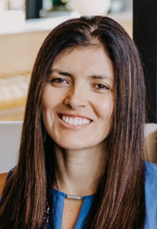
Erika has traveled to and lived in many countries because she thinks the world is cool. Starting at age 18, she has lived in, or traveled to, 30 countries. Before she settled down to raise her family and publish her books, she worked as an au pair. Now she’s focusing on teaching children about at least some of the places she’s lived and traveled.
Check out Australia
Her first book, Mission to Australia, is about an intrepid foursome of young travelers visiting Australia. The group of children is interesting in its own right since one of the travelers must use a wheelchair, but is undaunted by difficult places to access. The group represents many different cultures and ethnicities.
Questions for Erika
What compelled you to dream of visiting and living in different countries? Honestly, I have no idea. I did not grow up around people traveling to other countries. I just thought it sounded interesting and after visiting my first country, I enjoyed learning about the culture, history, and seeing the new sites so much that I wanted to see as many as possible.
How did you become an au pair? What hoops did you have to jump through to? There was a program I found online. It was a long time ago, so I don’t remember the details, but I know I requested to be an Au Pari in Spain. I believe I was provided with some information about families who were interested in me, and it was up to me to select. My grandma spoke Spanish so she spoke to them, and that was it. I requested the time off with my boss and I headed to Madrid.
Did you have a friend who inspired you? Or did a book lead you in that direction? Neither. I did not have any friends or family who traveled abroad. In fact, several of my families asked me why I wanted to go out of the country. I really have no idea what inspired me. I’m assuming seeing certain movies or pictures of places around.
Did you have to convince your parents that it would be safe for you to pursue this dream? Yes, but I was 18 when I first traveled, so there wasn’t much they could do to stop me. So, they chose to support me instead.
How did you pick the countries you wanted to visit? If you’re referring to Spain specifically, I didn’t do a lot of research. I just knew I wanted to go and since I had the program looking out for me, I thought it was a safe option. For countries since Spain, I research how safe it is, the best time to travel based on the weather, and what sites I want to see / experiences I want to have (i.e., all tourist sites, more cultural experiences, art, etc.)
What research did you do about the countries you wanted to visit?
I chose Spain because I believed I was Spanish (only recently learned I am Mexican) and I wanted to learn more about my heritage. After that, I started looking into the countries that I had heard about from people I have met on my travels, through people I have met through FB/FB groups, and now through my travel podcast.
What were your duties? It honestly wasn’t a good experience, so I usually don’t go into details as I don’t want to deter others from doing it. I honestly don’t believe my situation was the norm. I was supposed to teach the children English, but I only did this once. The rest of the time was spent cleaning and taking care of the kids. I believe my host family took advantage of au pairs, unfortunately.
Do you still keep in touch with the families? No.
Did you stick to just English-speaking countries? If not, did you already know the host country language? I spoke a little Spanish because of what I had learned in high school, but I was not fluent. I definitely spoke better Spanish when I came back though!
When you decided to be an author/publisher, did you go to school to learn how? My degree is in Business Administration with an emphasis in Marketing. I did not go to school specifically to be an author/publisher. I spent a long time doing my own research, joining author/publishing groups, taking online courses, and asking a lot of questions. Luckily, there are some authors/publishers who are happy to help new authors/publishers.
And do you plan to do more traveling with your family? What was your son’s reaction to visiting other countries? I believe you said he’d already visited two. Oh yes! We just got back from two weeks in Ireland. He had a wonderful time and came back with so many memories and experiences. When we asked him his top three experiences, he could only narrow it down to eight. Now we talk about him possibly doing summer camp in another country. We still have a long time to think about that, but that’s how much he loved the experience.
My son was only five when I first took him out of the country, so he doesn’t remember it as much, but he loves looking at the pictures and I know it’s helped to make him interested in other countries and cultures.
What is the next book in the series? Ireland!
And, lastly where are you and your family going next? This is tough because we keep getting different ideas, but I think it’s going to be southern Italy.
A lot of you may not remember the fall of the Soviet Union. I expect that Mr. Mikhail Gorbachev is turning in his grave with what Vladimir Putin has done to his country. So much for freedom and openness. But before that, the Soviet Union was not a nice place to live and part of Germany was under the Soviet Union’s control. Talk about repression, they wrote the book on it. This first book addresses how desperate people were to leave for a more just world. The second is also talking about repression but in a more oblique way.
Will they make it?
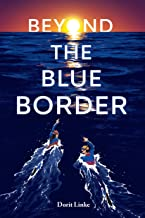
Beyond the Blue Border
Dorit Linke
Translated by Elizabeth Lauffer
A fascinating tale of two teens escaping East Germany during the waning days of the Soviet Union. But they don’t just escape by sneaking through a break in the wall that still exists between the two parts of Berlin. No, they decide to swim across part of the Baltic Sea. Even in late August the water temperature is very cold, especially the closer the swimmer gets to more northern countries such as Denmark. The story is told by Hanna Klein who is very athletic and has trained as a swimmer most of her young life. Her swimming partner, Andreas, is not trained but is driven to escape his dismal life with an abusive father and no career options than factory work. Part of the reason the two are fated to bad career choices is due to Hanna’s anti-Communism grandfather who posts a petition for people to sign protesting the East German communist leaders. He signs Hanna and Andreas’ names to the poster as the supposed authors. No more school for them, but Hanna is able to continue with her swimming coach though not on the elite swim team. Ulrich, the coach, figures out why the girl is practicing so much and helps her meet her goal. The story switches between the two main characters’ time in the sea and their time when they were in school and met a new student, Jens, who ends up getting out legitimately with his parents. The end of this book is a bit confusing, but the story is so compelling and horrifying the reader will want to finish and remember the book. There is much for teachers to use for classroom discussion in the book, but a larger map at the front would have helped immensely.
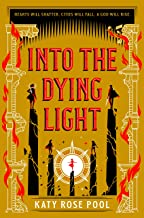
An intriguing fantasy story with lots of thinly veiled messages on religion and loyalty, this story could use a big edit to weed out all the extra verbiage. The book is just shy of five hundred pages long and has a group of main characters who are trying to free an abrasive god who wants to world to behave his way or die. He has been captured and imprisoned in the soul of Beru who fits a losing battle to contain him. Her sister is the “Pale Hand” and has the thankless job of murdering people who go against the leaders’ wishes. And then there’s the deposed prince who should be ordained king of one part of the world, plus a host of other main characters with varying roles to gain control of the world. The story is a good yarn and interesting with lots of philosophical issues to discuss with students. Just remember to allot a number of hours to the project. The fly sheets have a map of the characters world to some extent, but could have been a bit more detailed. This appears to be the final story of a series called the “Age of Darkness,” but also works well as a stand-alone novel.
BIBLIO: 2021, Henry Holt and Company/MacMillan Publishing Company, Ages 14+, $19.99.
For Mother’s Day our daughter Michelle gave me three books she thought I might like. Oddly enough, I’d read the first one already for the Children’s Literature Comprehensive Database. It addresses the issue of bullying amongst children. My impression is that children, even those who are popular and successful, are plagued with self-doubt as much as the less popular children, so, some of them are bullies just to not be caught out as being less than they seem to be.
The second book is about an old woman talking about her experiences during WWII as she, her brother. and their mother escape the town of Dresden, Germany. In addition to their journey to safer territory, it also about their journey with an elephant their mother rescued from the Dresden Zoo. The bullies in this story are the Nazis who wrote the book on how to be evil.
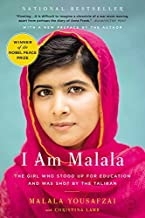
The last book is an autobiography of the youngest recipient of the Nobel Peace Prize for her advocacy of education for all people. Again, why do men seem to feel so threatened by females that anybody who isn’t male should be kept down. It isn’t just Muslims who make their women second class creatures. It wasn’t so very long ago that even females in the United States weren’t treated as equals.
But amongst all the cruelty we find hope, courage, and love. May it prevail
Holding Up the Universe
Jennifer Niven
This is a well-written story of two damaged teenagers. Libby Strout ate so much after her mother died, she had to be lifted out of her house through the roof by a crane, which, of course, destroys the house. After several years of therapy and homeschooling, she tells her father she’s ready to go back to school at the start of her junior year. She girds herself for the torment she knows will come. Of course, the “in crowd” boys start a game of who can ride the fat girl longest with Libby and Iris Engelbrecht, a girl even fatter than Libby, as the targets. Iris ends up as the first target, but when she tells Libby what happened, Libby chases the culprit, who is only saved by a truck going by. Jack Masselin, the perpetrator’s friend watches the whole performance, cheering for the girls the whole time. Jack has a secret he doesn’t share with anyone. A glitch in his brain denies him the ability to recognize faces. He can’t even pick out his parents or siblings in a crowd or at home without recognizing one of their “tells.” At school, he plays it cool and waits for someone to come to him. Then he uses that person to let him know who others are. But after he and Libby get into a fight and have to serve detention together, their relationship changes. Jack learns that it’s what on inside of another person that really counts. Soon, they begin to see past their surfaces and become friends. Jack and Libby begin to hang out together, sharing secrets. After he tells her his secret about not recognizing anyone else, she encourages Jack to seek help. She even goes with him to give him moral support and he encourages her to take the test that will see if she carries her mother’s cancer gene. Because he hasn’t ever told anyone about his problem, his parents put him in embarrassing situations, like having to pick up his youngest brother from a birthday party. His brother doesn’t want to leave the party, so he doesn’t respond when Jack calls for him to leave. Jack pulls the wrong kid out of the party, which scares the boy, horrifies the birthday boy’s mother, and leaves Jack in a heap of trouble. You’ll end up rooting for both Jack and Libby, but wishing they would solve the problems whose answers are right in front of their noses. There’s a lot going on in this book that will engage the reader and teachers will have a field day orchestrating discussions around the issues.
BIBLIO: 2016, Alfred A. Knopf/Random House Children’s Books/Penguin Random House, LLC, Ages 14 +, $17.99.
REVIEWER: Sarah Maury Swan
FORMAT: Young Adult
ISBN: 978-0-385-75592-4
ISBN: 978-0-385-75593-1
ISBN: 978-0-385-75594-8
???????????????????????????????
There have been a plethora of books about the horrors of WWII and especially the Nazi’s part in the conflict, but this one will definitely grab your heart and soul, especially if you are an animal lover.
An Elephant in the Garden
Michael Murpurgo
The book is based on a true story and is very compelling. It is told by the nurse who is taking care of an aged woman, Lizzie, in Canada, but it also told mostly in dialog by Lizzie about her journey from her home in the beautiful town of Dresden, Germany. For most of Hitler’s war Dresden remained unscathed and the German residents went about their lives. When the Allied forces were advancing on Germany, Dresden came under attack and was pretty much destroyed by bombs. The storyteller’s mother was a caregiver at the zoo and witnessed the birth of an elephant. Unfortunately, the elephant’s mother dies leaving her child to grieve. When it becomes apparent that Dresden is due to be destroyed by bombs, the storyteller’s mother get permission to save the young elephant by taking her away from the zoo and keeping her in the family’s garden, hence the title. When the bombing starts, the family is taking the elephant they’ve named Marlene after Marlene Dietrich for a walk in the neighboring park. Marlene panics when the bombs start to drop and runs away with Lizzie’s family hot in pursuit. They end up caught up in the massive exodus from the city and head toward Lizzie’s aunt’s farm. The rest of the story is about their journey to safety in Switzerland. Lizzie meets her future husband along the way who is Canadian. Again, although there is much hope in the story, it is set against the hideous cruelty and bigotry that was Hitler’s way of cowing his fellow Germans, though he was actually Austrian. This book will most decidedly keep you reading and even move you to tears in parts.
I have never understood why men are so frequently terrified of letting women have equal rights. I remember a very bright female high school classmate who wanted to go to college back in 1959, but her father refused because it would be a waste of money given that she would end up getting married and raising a family. The rest of us were appalled and I believe in the end her father relented. Whether or not she finished college or had a career I don’t know, but the same point was not made for the guys. I also had a friend who left school when she graduated from Junior High School so she could get married and have a family. I don’t know what happened to her either. She was very happy to leave school and become a housewife. But many of the Muslim men in our world are so frightened of their females’ potential they refuse to let them even learn to read and write. I remember trying to teach a Yemeni woman with five children how to speak and read English. Because she’d observed men in Yemen reading from right to left, she started out trying to read English that way. Her husband was encouraging for the most part but was adamantly against her going to a gym because she’d not be able to exercise in her full proper burqa. Why are men so frightened that all other men are out to rape their wives? Why do they feel it’s the women’s fault if these men can’t control their urges? It wasn’t that long ago that American women were the inciters when they’d got raped. The teller of this story made headlines with her bold advocacy for female rights not only in her native Pakistan but then all around the world. I’m not a big fan of non-fiction, but this book will keep your interest throughout.
Malala Yousafzai with Patricia McCormick
This young woman, with the help of her father and the support of her country, is trying to change the world for females and, at her tender age, has already been awarded the Nobel Peace Prize for her efforts. She has also been almost killed by Pakistani Taliban members because they think she’s defying Allah’s will by standing up for her right to an education. The book is told in her voice and because she is, indeed, the author is autobiographical. But since English is not her native language another person’s name appears alongside Ms. Yousafzai’s as the supporting author. The story is horrifying for what is happening around the world, particularly to Muslim females under Taliban or other Sharia religious groups who have found what they think is “God’s Rule.” But I guess no one has asked them why any god would make females capable of rational, intelligent thought and then declare they can’t use such abilities. Malala grew up in a small poor area of Pakistan where all children at least were allowed a primary school education, after which a lot of girls were married off at the tender age of eleven. Malala’s father runs a school where girls are encouraged to finish high school. That is until the Taliban take over. But even before then, girls are expected to wear figure-hiding clothing and cover their hair as is common in many Muslim countries. But even after the Taliban take over, Malala’s father keeps his girls’ school open though fewer older girls come anymore. And, at the age of 12 or 13, when Malala and her friends are riding home on the school bus, a Taliban fighter jumps on the back bumper and shoots Malala in the head, also wounding two other girls. Luck was with Malala on that day and she ends up being saved by doctors from Birmingham, England. Her recovery was paid for by the Pakistani government which didn’t support the Taliban’s efforts. Brave girl that she is, Malala still is fighting for females’ equal rights around the world and still going to school. And her mother is now learning English. May we all live by their bravery.
BIBLIO: 2014, Salazari Unlimited/Little, Brown and Company, Ages 12 +, $16.99.







 sarahsbookreflections